BLOG

Hey Literary Agents, Quit bothering me
July 13, 2015
Looks like an empty beach right? But as all writers know, you can't walk down even an abandoned beach without some literary agent jumping out from behind a palm.
"Here's my card," they say smoothly.
"I don't except business cards with that format." I patiently explain. It's no use, they're like paparazzi.
The writers are giggling. The Literary agents, not so much, mostly because they don't read author blogs.
Breaking into the "book world" is like trying to get into the Merchant Marines. You can't get a job aboard a ship without a Seaman's Card. "How do you get a Seaman's Card?" You ask. It's easy, they mail it to you once you have a job aboard a ship. Similarly, if you want your very own literary agent to help you secure a great contract with a major publishing house ––it's easy–– first write a "Bestseller."
The odds of me working on a ship, or landing a literary agent are about even. Lucky for me, the chances of walking down this beach are pretty high, it's near my house. If you're a literary agent, I have some free advice ––watch out for the coconuts.
If it sounds like I've given up on finding an agent or writing a best selling novel you would be mistaken. I found my literary agent a coconut's throw from the beach at the Kauai Writers Festival. Now I just have to finish my manuscript and send it to her. Then all my dreams will come true and I'll finally be able to get off this tropical island.
East is East and West is West
March 19, 2015
Oh, East is East and West is West, but never the twain shall meet." I believed Mr. Kipling until I moved to Hawaii. One of the most interesting things I've learned from my Japanese friends and teachers is how the East and the West have been connected since their earliest beginnings.
Western Civilization, as we all know, was founded upon Greek ideals; the concept of democracy, Aristotle, and Plato's foundations of reason, and let's not forget Homer's Iliad and The Odyssey. A certain young pupil of Aristotle, Alexander the Great, reached India in 326 B.C. establishing a connection between the two cultures and Empires.
Much of what was once considered Greek Thought is now known to be the result of a rich exchange of ideas in the ancient world. Richard Mckeilley's wonderful book, The Shape of Ancient Thought details how even the earliest writings of Greek thinkers like, Heraclitus, and Thales closely parallel the Upanishads of India. It is remarkable to read how closely linked the cultures of East and West were through the centuries. The mobility of ideas in the ancient world should not surprise us too much, though I admit this book has been a bit of a shock.
When we consider that English is a Proto-Indo-European language, a clearer picture begins to emerge. Ancient Sanskrit and English share hundreds of words in common. These twain, (two) East and West, have been connected since their earliest beginnings. It's exciting when you learn that everything you thought you knew ––turns out to be ridiculously incomplete. The world becomes new.
I highly recommend Richard Mckeilley's book. I think that you will be delighted and amazed.
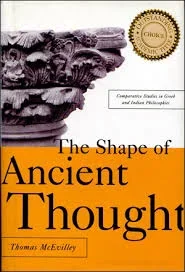
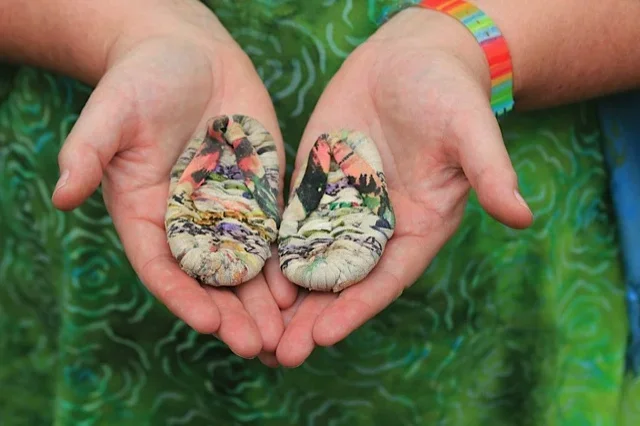
Photo by Jennifer Arnold
Tiny Slippers and Jizo
March 26, 2015
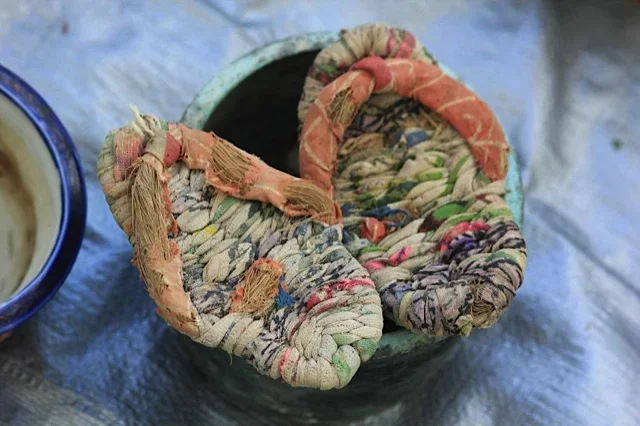
This pair of tiny slippers were left at the old Shingon Buddhist Temple in the Lawai Valley many years ago. Chance are, we'll never know who made them, or for whom. One thing we do know ––these two small offerings that were left at the Temple–– tell a big story.
Photo by Jennifer Arnold
This pair of tiny slippers were left at the old Shingon Buddhist Temple in the Lawai Valley many years ago. Chance are, we'll never know who made them, or for whom. One thing we do know ––these two small offerings that were left at the Temple–– tell a big story.
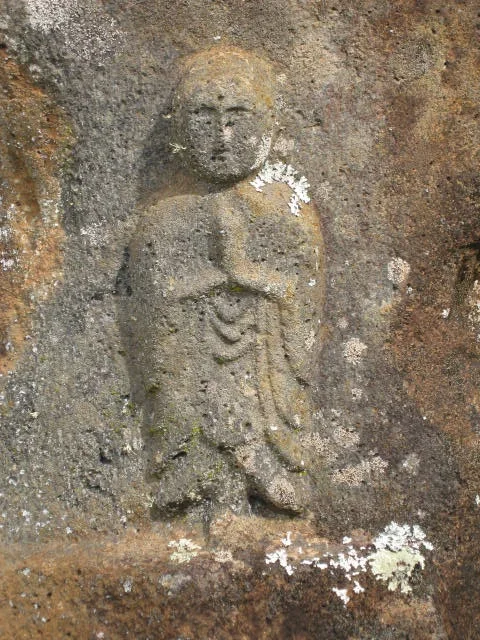
Photo by Jennifer Arnold
Some of you may recognize Jizo. He is an important Bodhisattva, revered throughout East Asian Buddhism. In Japan, Jizo is one the most respected and loved divinities. Among his many roles, he is the guardian of children. Although we don't know who made the tiny slippers, or why they were left at the Lawai Shingon Temple, I think we can make a guess that Jizo was part of the story. This image carved in hard stone radiates a softness, a gentleness that is hard to put into words.
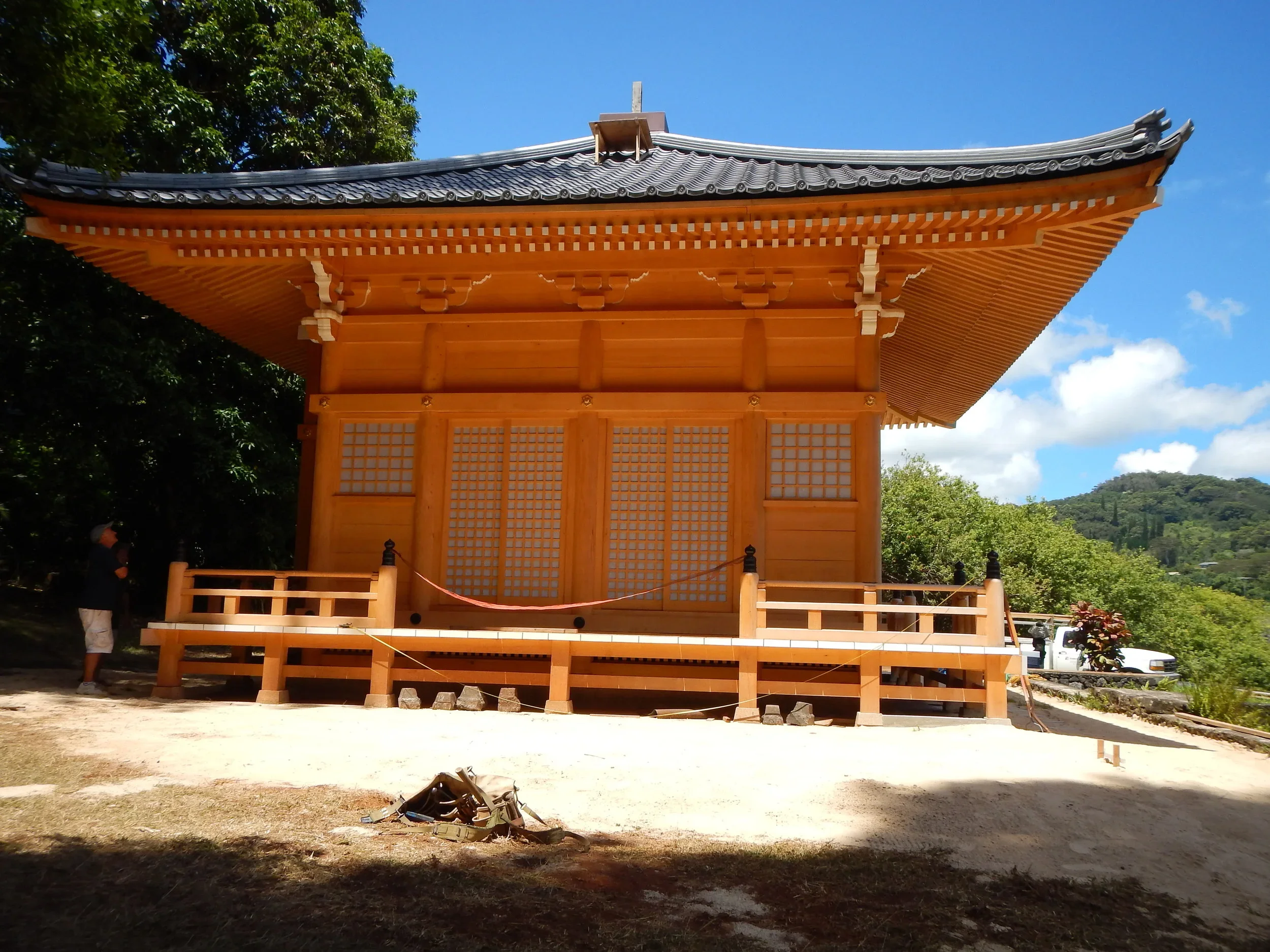
The Temple looks great, but something's missing. I wonder what it is?
Heavenly Connection
March 21, 2015
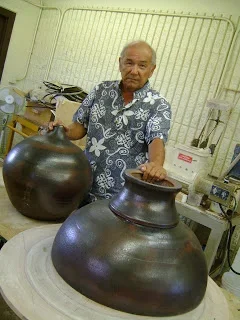
Wayne Miyata, artist and instructor at Kauai Community College created the sections out of clay. Before they were fired in the kiln, the base and ball were massive. If the shape and perfect scale isn't amazing enough, the glaze is a perfect match to the copper box that has been weathering on the temple roof. Because of the unique environment at Lawai, the copper changed into a wonderful brown instead of the green we sometimes see.
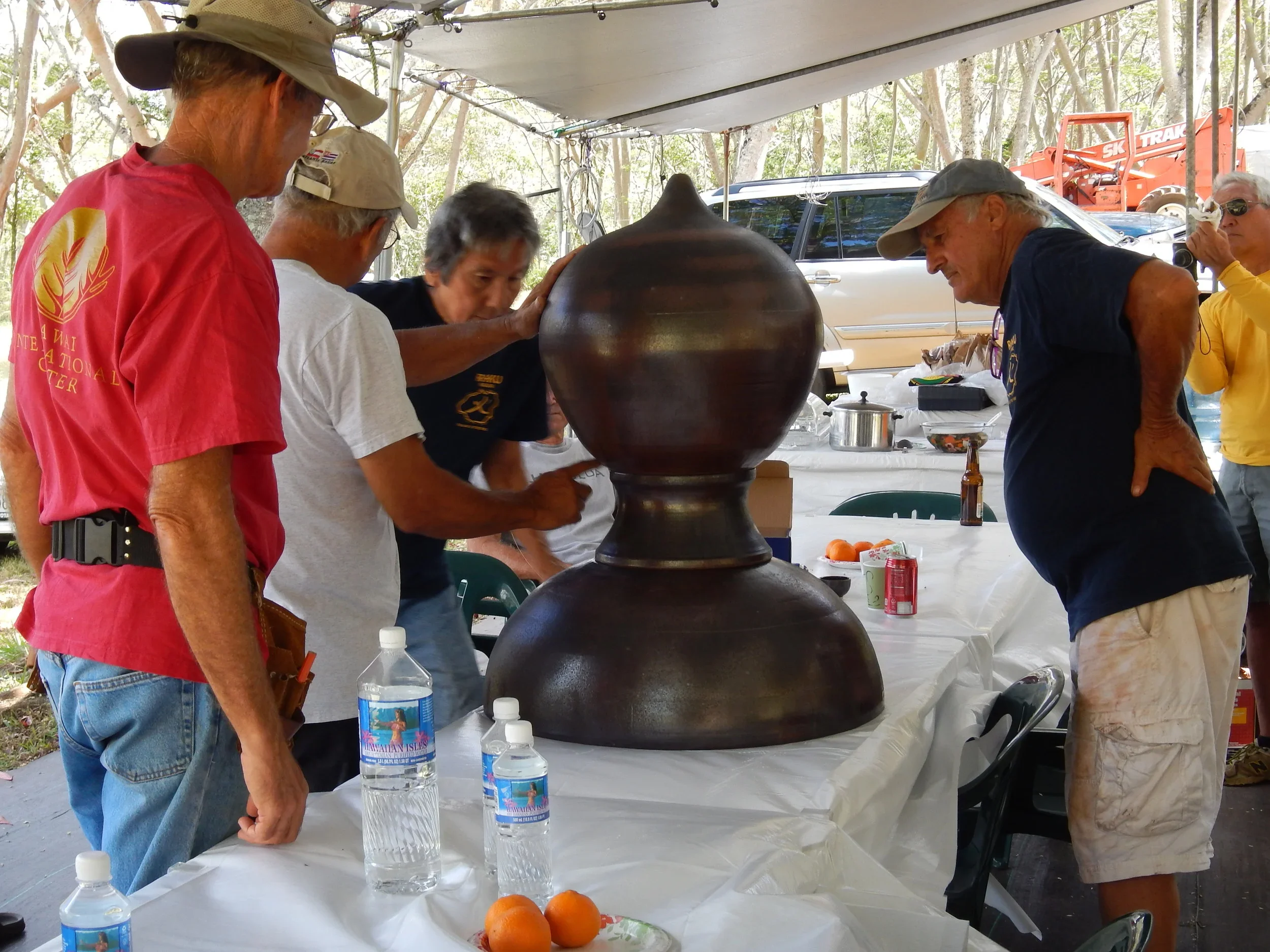
Now, how do we attach a sacred clay ball to the top of a temple? It's not like you can bolt it on. Every so often we do have Hurricanes.
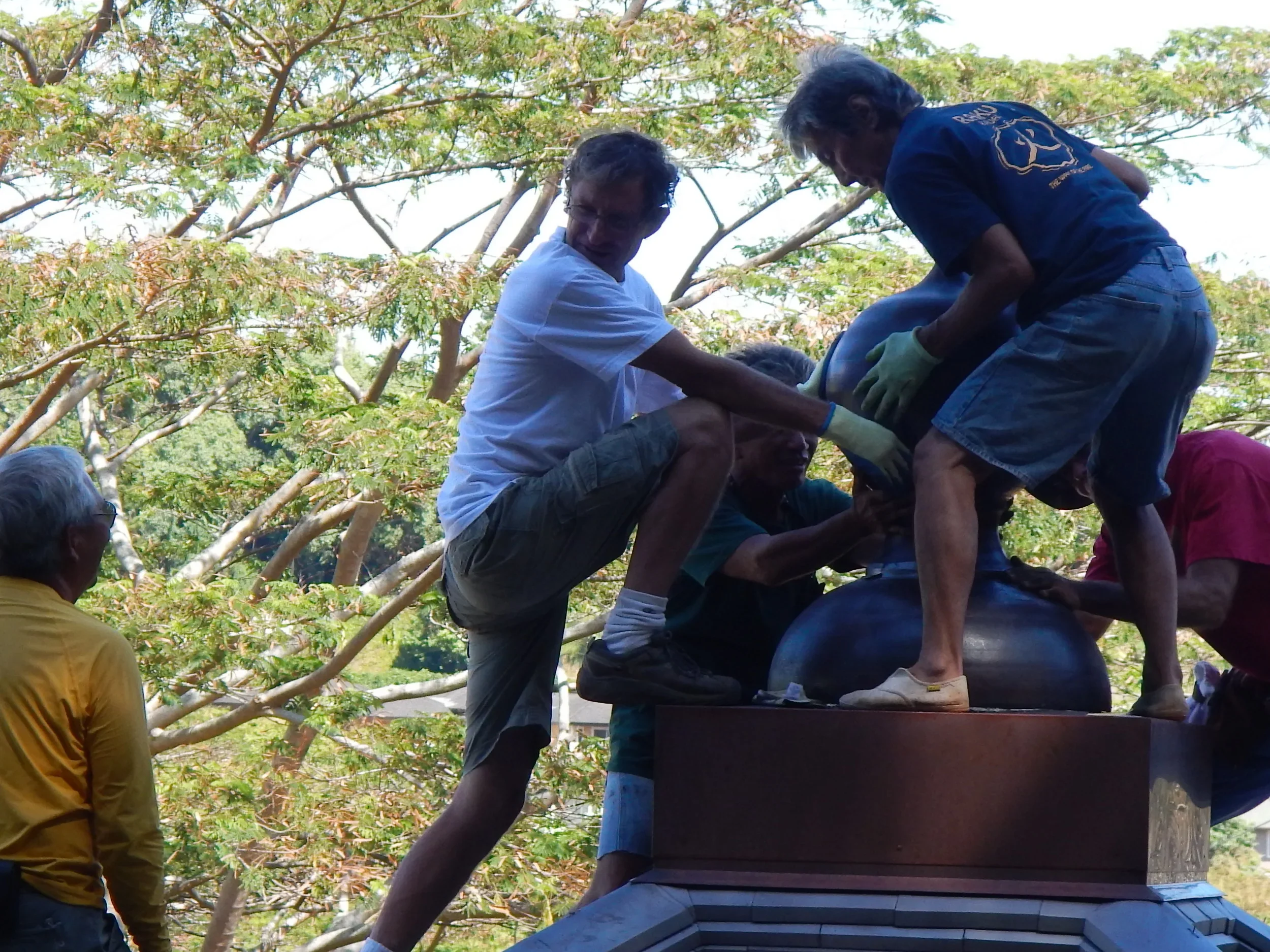
Yep, that's me taking my eye off the ball. Author's have really short attention spans. Check out the color of the copper box.
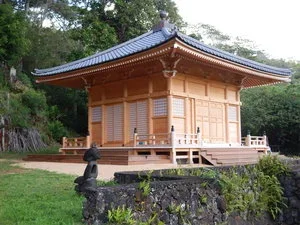
With the roof complete, the sacred ball connects the structure to heaven. Beneath the Temple is the turtle's chest, which connects the temple to the earth. This 13th century building is designed to last a thousand years. I would say, "that's impossible," but the oldest wooden buildings in the world are in Japan. You really have to come and see the Lawai International Center. No hurry though, you have hundreds, if not thousands of years
Say No to Cheap Sunglasses
March 20, 2015
"What's the big deal? They're five dollar sunglasses and if I drop them on the pavement, so what?"
The problem is when you don a pair of cheap sunglasses you're actually causing permanent damage to your eyes.
Cheap glasses are tinted, so your irises dilate to allow in more light. But cheap sunglasses do not block UV rays, so more light is not a good thing. You're better off squinting.
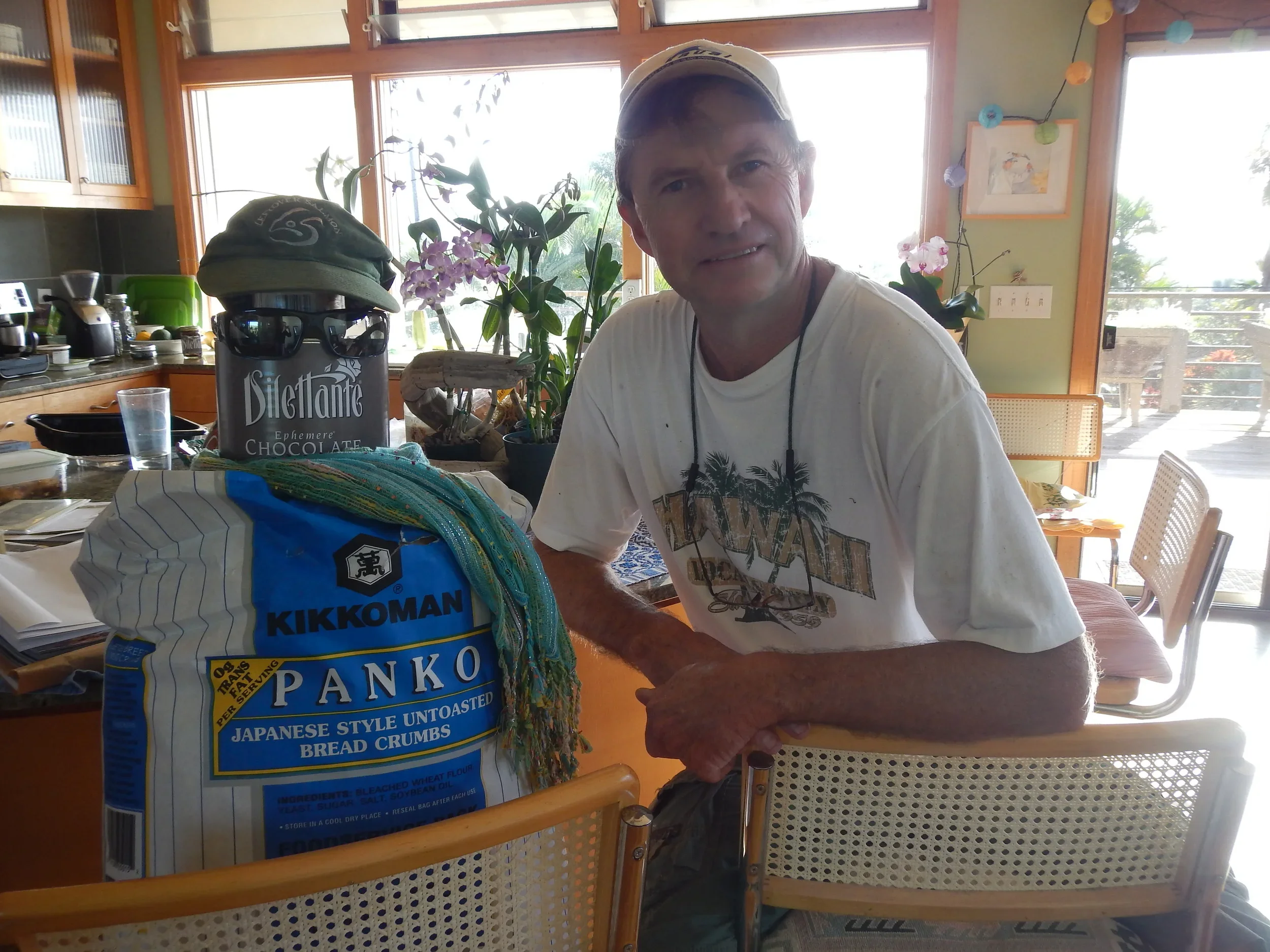
If you think I'm sitting next to a real person, you should make an appointment and get a quality pair of prescription sunglasses.
Yes, that is a month's supply of Panko, with a week's supply of Dilettante chocolate. The combination of these two foods are proven to contain vitamin D and more beta Carotenes than carrots. Okay, I made that part up, but you'll never convince my wife that Chocolate is not food, don't even try.
The main thing is ––It's time to upgrade. "Get rid of those cheap shades Mr. Panko man.
Tea Banned in Public Places
March 19, 2015
"Are you serious?"
"Yea. The good news is, you get to hang out with all the smokers who have been likewise banished." I explained.
"You're joking, right?"
"Okay, you found me out, I'm kidding. Yes, we all take our tea and coffee for granted. You've heard of comfort food? Tea is like liquid harmony. Water from the sun for my tea, please," I call upon an imaginary waiter. My companion remains lost in his phone.
"Who would have guessed that tea is a Camellia plant?" I continue, undaunted. "Camellia Sinensis to be exact. It started out as a medicine and is now the most popular beverage in the world. It's good for you, it tastes great, and that little bit of caffeine is fun. They say you can study tea for a hundred years and never learn all the varieties." I take a satisfying sip.
"Hey, sure, tea is great. But what's it done for me lately?" He almost makes eye contact to get his point across.
"Tea is old school. It connects us to each other, a little bit like your hand held device there. Look, here we are having tea together, while you stroke your phone, expanding the view so you can read this blog. It's like magic and stuff."
"Huh?"
I pour more tea and smile.
Freelance Editor
March 18, 2015
I've no problem making up stories, but there is more to the craft of writing. My strength might not be with the fundamentals, good old fashioned spelling, punctuation, or grammar. So, the day comes when a writer has to set aside their massive ego and let a professional editor do their job.
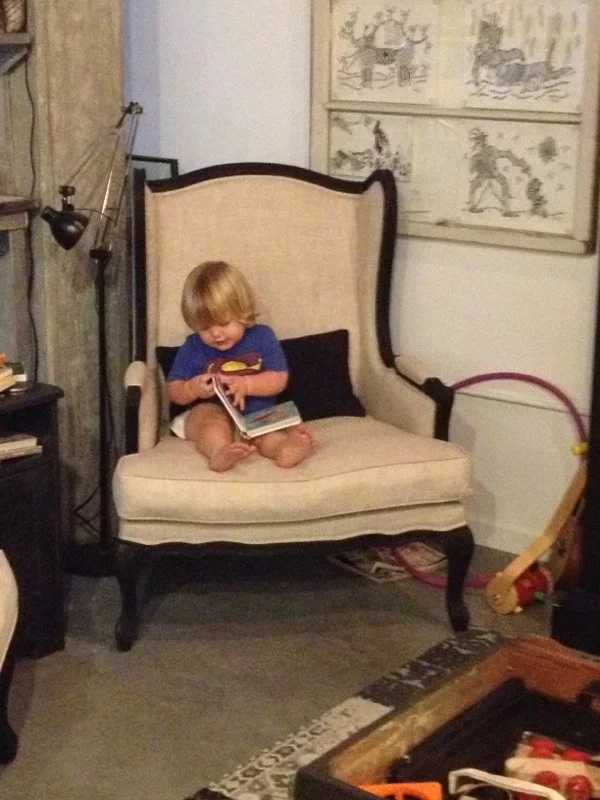
Looks are often deceiving. Hard-nosed editors come in small packages. I know he doesn't look that tough, but he cut my first hundred pages without batting an eye lash.
Looking back on it now, I have to admit, the book did benefit from a professional's touch.
With writing, the more perspectives the better. If you've read Sighing Woman Tea, or do so in the future, I would value your feedback. But I won't lie, I really do like Advil a lot more than the generic stuff. I'm sure it's because of the candy coating.
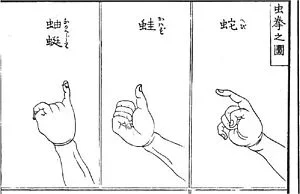
The Japanese game Mushi-ken should look familiar. From left to right: Slug (namekuji), frog (kawazu), and snake (hebi). The frog is the thumb. The slug is the little finger, and the snake is the index finger. Don't ask me how you win. I've no idea.
Rock, Paper, tea
March 17, 2015
Now, Rock, Paper, and Scissors is universal. I may have learned it before I learned to read. Rock, Paper, and Scissors is as American as ketchup. Right? Yep. Except ketchup is from China, and so is the game of Wazazu, the original Rock, Paper, and Scissors. You guessed it, from the Han Dynasty (206 BC-220 AD) From China, it traveled to Japan and became Mushi-ken, before the game made it's way across the Pacific to America about a hundred years ago.
In England the game is called, ching-chang-walla, which makes sense when you think about it. If you doubt, try playing while saying, "Ching! Chang! Walla!"
Having a disagreement? No need to become upset. There's a fair and fun way to settle things.
Note: Before we play to see who will make the tea, I just wanted to let you know in advance, I'm going to take the frog. You can take the slug, but I can't see how a slug wins against a snake or a frog? Good Luck.
"Ching! Chang! Walla!"
Tea for the Tillerman
March 15, 2015
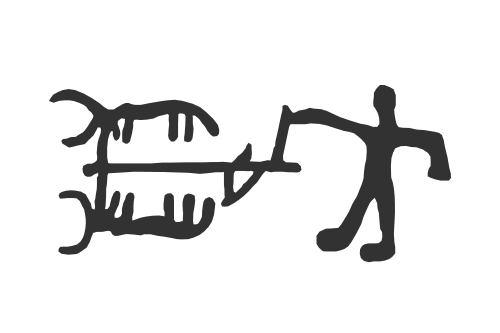
Thank you Cat Stevens. That was a fantastic album. What is a tillerman anyway? The word can be traced back thousands of years to it's Nordic roots. This Bronze Age carving of a farmer tilling his field is looks very similar to a petroglyph. I really like how the image has an almost arial perspective. Pretty impressive considering they didn't have Google Earth looking down on Gotaland in 1700 B.C.
The image of the farmer tilling his field brings to mind the ancient turtle shell script of China. The symbols are some of the earliest forms of writing. The characters are pictographic, meaning they come from representational pictorial drawings. Early Chinese Characters are derived from observations of nature.
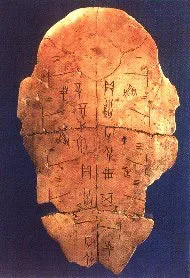

This ancient oracle bone script is a pictogram of the moon. It became stylized over the centuries to the character below.
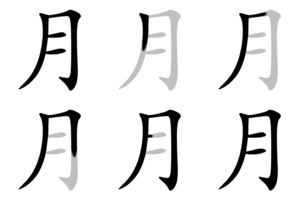
The Chinese system of writing called, Hanzi, came to Japan in the 5th century. In Japan, the characters are called, Kanji. The moon in Japanese is Tsuki. As in English, the moon also represent a month. Here on Kauai, Kanji is everywhere, and it's exciting when you learn the meanings. I know a dozen first grade Kanji, so only a few thousand to go.

This is the Kanji character for tea, or cha. Quick, run and look on the side of your green tea box.! Now, put the kettle on.
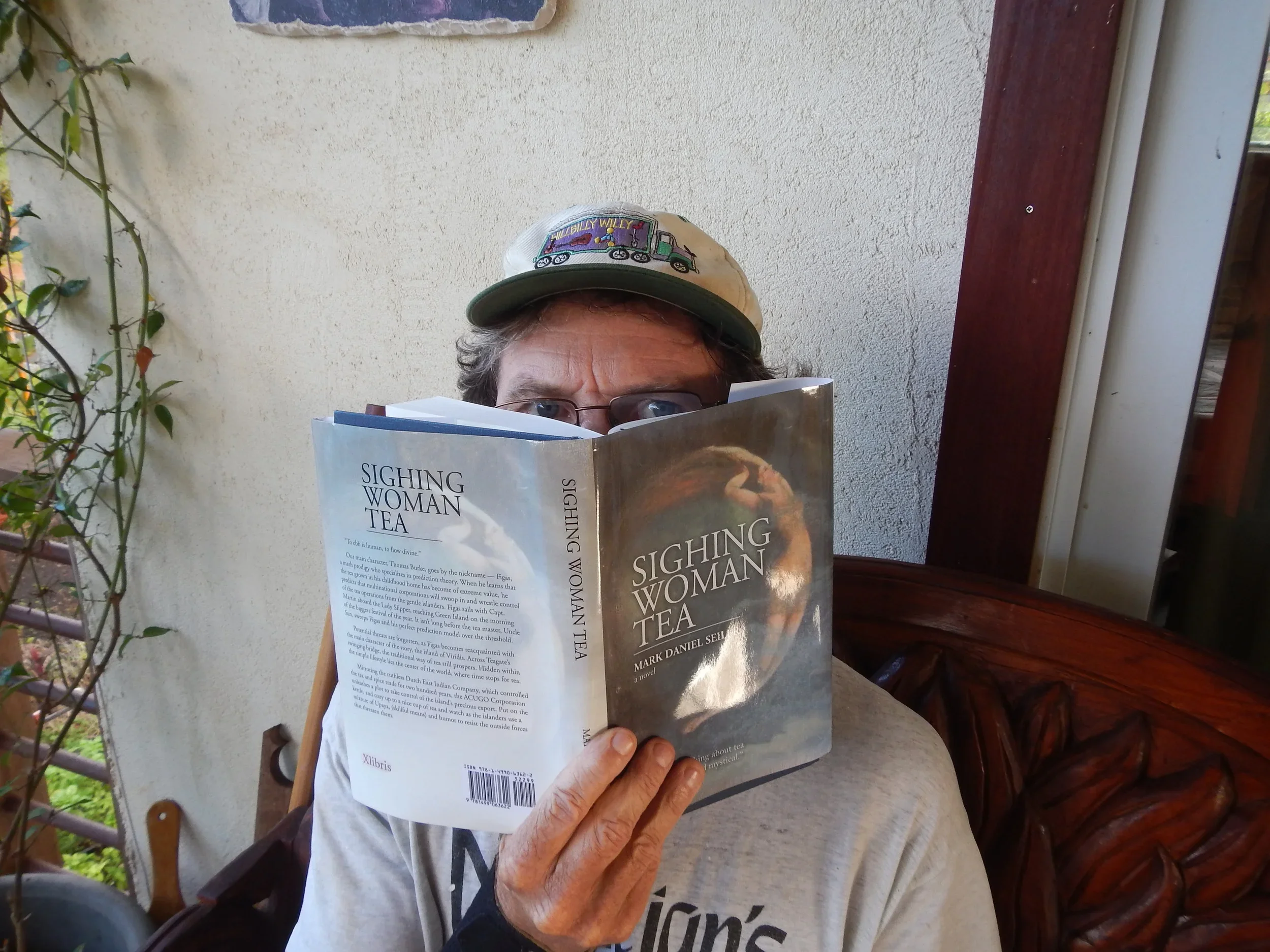
I came, I saw, I drank Tea
March 15, 2015
Lots of people have been asking me, "So what made you decide to write a book?" Turns out, the reason why they're so curious is that the world is full of fledgling writers. "How'd you know you had something important enough to write a whole book?" Yeah, why does an old carpenter decide to sit down and write a novel? Most of us are unsure if we have an original thought, or idea worth writing about. We all can't be Suzanne Collins and write "The Hunger Games."
Before I began, I felt strongly that if I was going to write a book, I'd be careful about the ideas I set down on paper. Even if you're writing fiction, an author has a responsibility for their words and ideas. I wouldn't want something that I've written to be misinterpreted and have unintended consequences. Ideas are powerful things. Right? Maybe it's just me, but I wouldn't be able to sleep at night if I wrote about a bird call that signaled a violent revolution, and war. Look, I'm not taking a shot at anyone. (At least not until I hear that secret whistle.)
Yes, I understand that bad people do bad things and it's up to us good people to do something about it. Who didn't love Gary Cooper in, High Noon. Katniss really can kick-butt with her bow. Most of us grew up with the idea of "might for right" even before we knew how to read. We learned that Camelot isn't possible without the Knights of the Round Table. Julius Caesar wouldn't have made headlines back in the day day by sitting down to tea with his enemies. Or, maybe he would have? Gandhi did pretty well. He won the Nobel Peace prize five times, and also manage to liberate his country through civil disobedience. Martin Luther King Jr. and more recently, Nelson Mandela have proven that positive change can be brought about through nonviolent struggle. If raising an army to fight an army is the only choice we have as humans, you have to admit that does seem a bit limited.
So, what's this got to do with the price of tea in China? Well… everything, as it turns out. I came across an article about a rare tea auction where an ounce of tea sold for ten times the price of an ounce of gold. How's that possible? I was shocked. Truth is stranger than fiction. Tea more valuable than gold? You can't make that up. Bad people will do bad things to get a hold of that tea. I was off and running, armed with secret-special knowledge that I didn't know enough to know any better. A mere eight years later, I published an award winning novel. If I can do it ––you can do it. You need help along the way. It's not something you can do all on your own. I can honestly say that if you really want to write a book, you can.
Good luck.
Play It Again Buddha
March 14, 2015
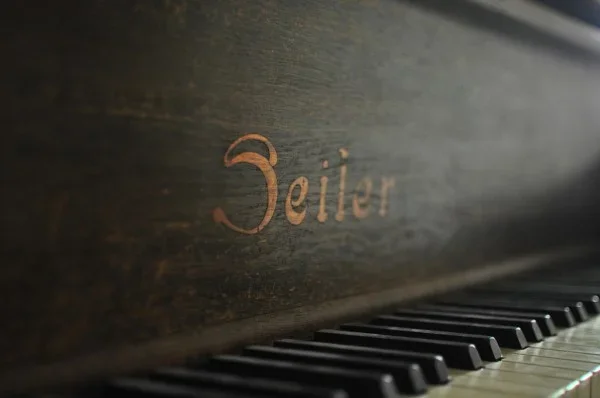
I was so excited to see this photo of a Seiler piano. I don't play piano, but it made me feel good to think a distant relative was akin to Steinway. Making pianos––that's a noble profession. My brother gave me a great book to read, "The Piano Shop on the Left Bank." A wonderful story of a fellow living in Paris who passes by this piano shop and eventually goes in to purchase a piano. Turns out, it's not as easy as it sounds.
The Buddha didn't play the piano either, it would not be invented for another twelve hundred years or so. He did have a disciple named Zona who played an Indian Lute. Zona was having a hard time progressing in his meditation practice. He decided that he didn't have what it took to be a monk.
The Buddha asked him, "When you are playing music, do you tighten the strings so they are very tightly tuned?"
"No, this produces a very shrill sound and the string can break at any moment," Zona explained.
"Do you make beautiful music when the strings are very loose?"
"No, the strings don't produce much of a sound when they are loose."
The Buddha smiled. "Not too tight, not too loose, just so. The Middle Way."
Google Censored and Sensibility
March 12, 2015
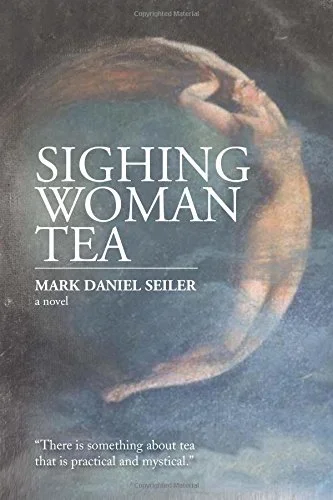
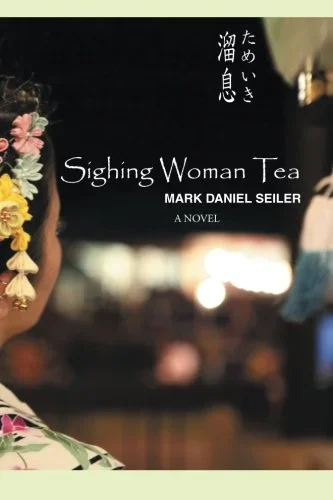
Once the giant stack of papers in my study became a well-edited manuscript, it was time to come up with a cover design for my new novel. "Don't judge a book by its cover." But let's face it, we do.
By far the most arresting image around our house was an old painting from my late grandmother. Before I was born, my mother's mother, Virginia, had an art gallery in San Francisco, back in the early fifties. Virginia had red hair, and by all accounts, she was a wild thing. Maybe in her youth she modeled for this painter? I'd love to know who the artist was.
My guess is the painting is from the 1920s. For some unknown reason I get the feeling the artist was a woman. I hope where ever she is now, she's happy with her painting of the moon on the cover of my book. I wonder if she would be interested to know that a google administrator decided the image was, "Adult Content," and would not allow the image to be used in a google display ad. Luckily I don't live in China, where I understand the internet is censored.
My first idea for the book cover was to have my good friend, Rev. Kosen Ishikawa, take a picture of his wife, Yayoi. I asked them if they would be willing to help with my book cover. They agreed. It took several months, and then lo and behold, Kosen sent me a wonderful photo of Yayoi at a Bon Dance festival, here on Kauai. In the meantime, I pursued the idea of using the painting as a cover. To make a long story short, I now have two covers for my book. Which cover do you like best? (You may want to read the book to make the most informed decision. (Ha ha!)
Both covers are available from Amazon. If you're strapped for cash at the moment, let me know, I'll try and get you a copy, especially if you're willing to write a review on Amazon.
Ichi-go Ichi-e
February 14, 2015
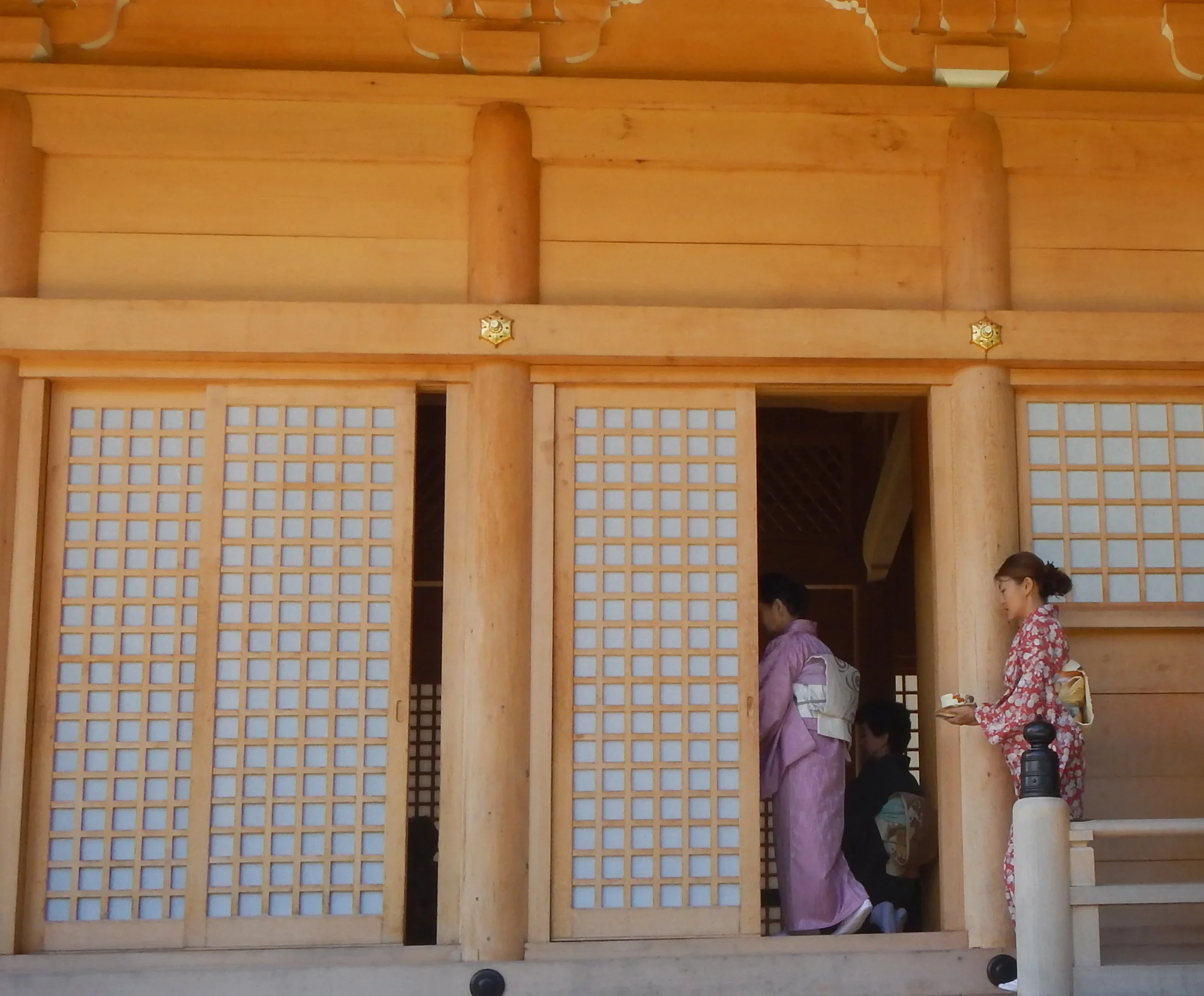
I arrived early in the morning at the Lawai International Center in order to help the Aunties from the local tea society, the Chado Urasenke Tankokai. When I walked up to the Hall of Compassion, I was surprised to see most of the preparation for the tea ceremony had already been completed. Although it was the first time, the woman worked with quiet efficiency as if they had performed the ceremony in the new temple many times.
I was asked if I would hang a scroll in the center of the altar area. It read,
一期一会
Later, after the ceremony, I asked what the Japanese Kanji characters meant.
Ichi-go Ichi-e is roughly translated into English as one time, one meeting.
Beyond the graceful movements of the woman preparing and serving the tea were concealed layers of meaning. I was determined to pay close attention and discover something new. During the ceremony, time seemed to stand still, yet it went by too quickly. It felt as if the mystery all around us was being recognized and intensely observed for a brief moment. Nothing was explained, yet everything was different.
When the Grand Tea Master, Dr. Genshita Sen XV, performed the tea ceremony at the Kapaa Hongwanji Mission, he prepared two cups of tea. They were sacred offerings, one for those who have passed, and the other was offered for peace.
It sparked a thought: perhaps my story about tea is a kind of offering? Wait for the water to reach a boil ...one time, one meeting.